Curtains work as a filter whether you want them to or not. Every day they catch dust, pollen, cooking oil, smoke and moisture off the glass, and because the fabric hangs still, almost none of it shakes back out. What you notice first is usually not dirt but a change in colour, a room that smells stale even after airing, or grey spotting appearing along the bottom hem in winter. By then the soiling is through the weave rather than sitting on it, and a vacuum on low suction will not reach it. Cooking fat, damp and hem mould are also genuine health hazards in a bedroom, not just a cosmetic problem.
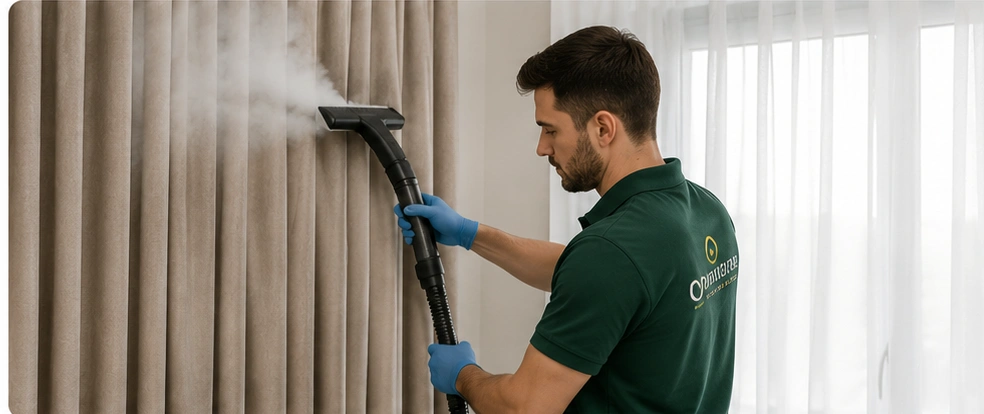
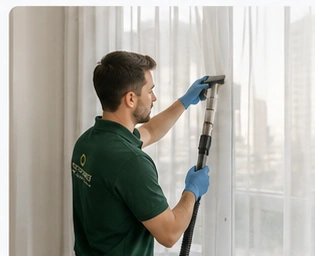
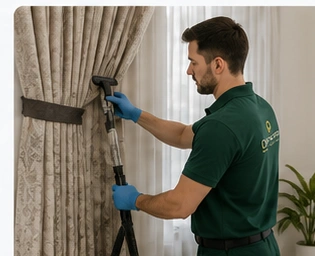
Which method our technicians use is decided at the window, not on the phone, and knowing which is which is most of the expertise in this trade. Most fabrics take steam cleaning on the rail: the panel is vacuumed top to bottom, treated for the marks that need individual attention, then steam cleaned with the moisture controlled so the fabric never gets loaded up. Delicate sheers, silks and viscose get a low-moisture dry method instead, because heat and water are what make those fibres shrink. Blinds are a different job again: slats and vertical vanes are cleaned face and back, and roller and roman fabrics are treated as fabric rather than wiped.
The part people do not expect is how much of the job is the parts nobody looks at. Headers and pleats hold more dust than the body of the panel, hems hold the moisture and the mould, and the back of a blockout lining is often in far worse condition than the side facing the room. All of that gets cleaned by an experienced technician working room by room, and every panel goes back onto the same hooks in the same order.