
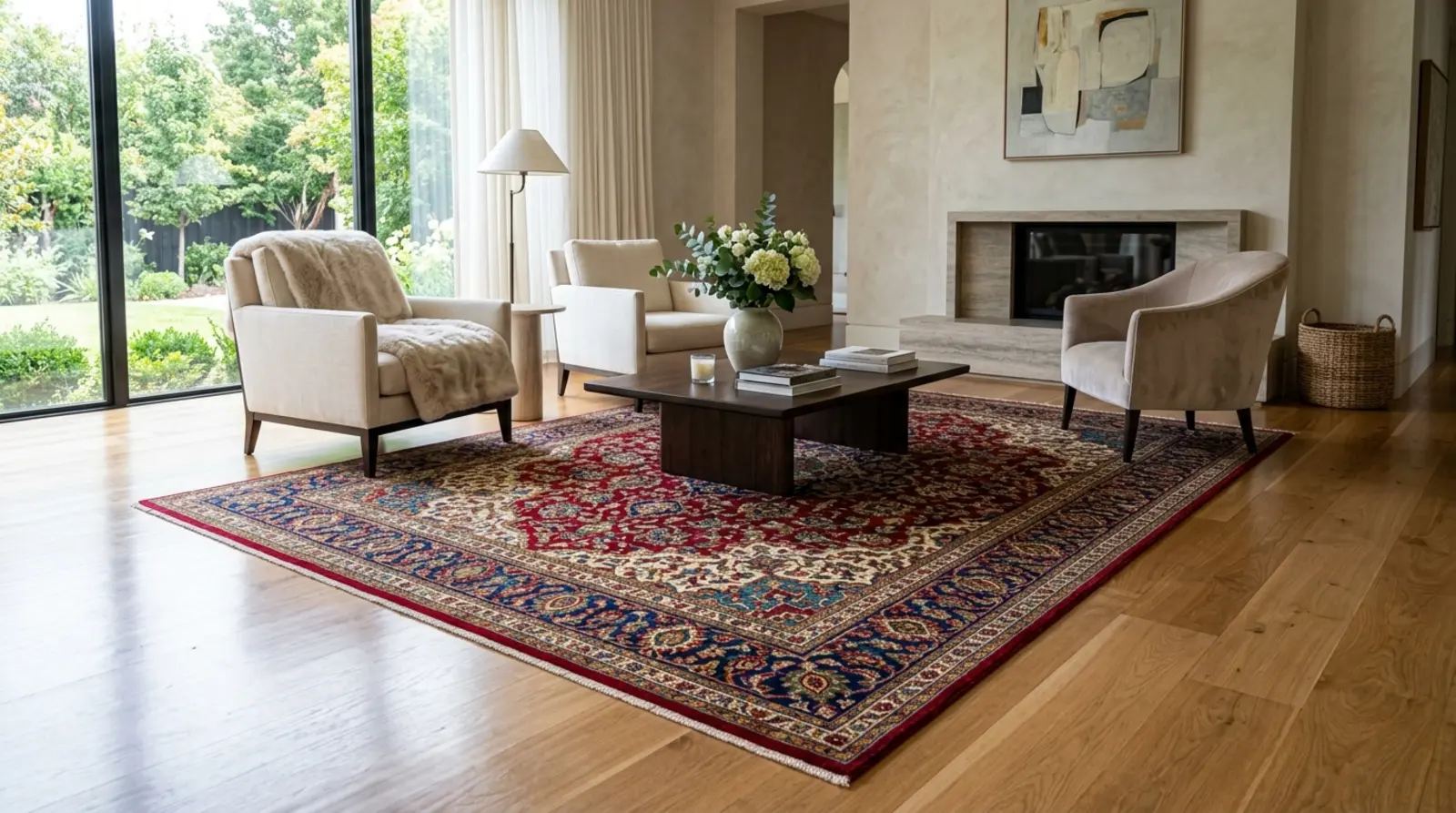
Wool, Silk or Viscose: Know Your Rug Before You Clean It
A rug is not a small carpet, and treating it like one is how people ruin things they paid a great deal for. There is no underlay beneath it, the dyes are frequently not fast, and the amount of moisture that safely cleans wool will destroy viscose. Knowing what you own is the whole job.
Why the Fibre Matters More Than the Price
Carpet is fixed to the floor over underlay, so moisture has somewhere to go and the backing is supported. A rug sits loose on a hard floor. Wet it too heavily and the backing distorts, the edges cup upwards, and any dye that is going to move has a clear path across the pile. That is before you consider that the floor underneath is often timber, which has its own opinion about water.
Wool: Forgiving, Within Limits
Wool is the most common rug fibre in Melbourne homes and by far the most rewarding to clean, because it releases soil well and recovers its loft. Its two weaknesses are alkalinity and heat. The wrong pH strips the natural lanolin and leaves the fibre dry, brittle and prone to felting, and it does so permanently. Wool-safe chemistry is not a marketing phrase, it is the difference between a rug that comes back and one that does not.
Silk and Viscose: Where the Damage Happens
Real silk is delicate but predictable. Viscose is the genuine hazard, and it is everywhere, sold under names like art silk, bamboo silk, banana silk and rayon. It is a plant-based fibre that loses most of its strength when wet, yellows on contact with water, and crushes into permanent shading that looks like a stain but is actually flattened pile. A viscose rug cleaned like a wool one is usually finished.
Telling them apart by eye is unreliable, which is why every rug we take on is fibre-identified and dye-tested at each colour boundary before anything is applied. If you are unsure what yours is, that assessment is part of any rug cleaning quote rather than an extra.
Jute, Sisal and Seagrass
These are plant fibres that genuinely do not like water. They stain from it, they smell when damp, and they can rot at the backing if soaked. They are cleaned dry, or very nearly so, and anyone offering to steam clean a sisal rug should be asked to explain how they intend to dry it.
The Test You Can Do at Home
- Look at the back. Hand-knotted rugs show the pattern clearly through the reverse; machine-made ones show a grid or a mesh backing.
- Damp a white cloth with cold water and press it firmly on a hidden edge for ten seconds. Any colour on the cloth means the dyes are not fast.
- Rub the pile against its direction. Viscose flattens and shades dramatically; wool springs back.
- Check the fringe: a genuine fringe is the warp of the rug itself, a sewn-on one is decoration.
- Look for a label, but do not trust it alone. Blends are common and labels are optimistic.
Pet Accidents on a Rug
This is the one situation where speed genuinely changes the outcome. Urine is acidic when it lands and turns alkaline as it breaks down, and on a wool or silk rug that shift can permanently alter the dye. A mark treated within a day or two usually comes out; the same mark six months later is often a permanent colour change rather than a stain. If it has soaked through, the floor beneath needs attention too.
Keeping It Right Between Cleans
Vacuum regularly but keep the beater bar off anything hand-knotted or delicate, and never vacuum a fringe — use the crevice tool alongside it instead. Rotate the rug one hundred and eighty degrees twice a year so both sun exposure and foot traffic spread evenly. Use a proper underlay: it stops slipping, adds a little cushioning, and lets air move underneath. And lift the rug occasionally to vacuum the floor beneath it, because a surprising quantity of grit works its way through.
Getting It Cleaned
Most rugs are cleaned in the room they live in, dried flat so the edges do not cup, and finished by hand at the fringes. It is regularly booked alongside the carpet cleaning in the same room, and alongside upholstery cleaning when the lounge sits on top of it. Send a photo of the rug and of its reverse, and we can tell you what you own and what it will cost before anyone touches it.